
What does it mean to surrender completely to God’s calling? And how does a person develop a burden for a people and place they have never known? For missionary Brian Johnson, serving in Lithuania began with a lesson in unconditional surrender, a willingness to trust God, and a growing desire to learn about a country that was once entirely unfamiliar to him.
Brian’s testimony reminds us that missions is not always the result of a dramatic moment or an unmistakable sign from heaven. Sometimes, God develops a burden gradually through study, prayer, relationships, and a willingness to follow wherever He leads.
The First Step: Unconditional Surrender
Although Brian grew up in a Christian home and attended Christian school, he did not understand his need for personal salvation until he was 18 years old. On May 30, 1992, he came to understand his spiritual condition and trusted Christ as his Savior. That same night, he recognized God’s call to preach.
As Brian began Bible college, God started working in his heart about missions. Initially, he resisted the idea. Having insulin-dependent diabetes, he questioned whether serving in a foreign country was practical or even possible.
Then he heard a message titled “Unconditional Surrender,” based on 1 Thessalonians 5:24: “Faithful is he that calleth you, who also will do it.”
The message challenged Brian to stop placing conditions on his obedience. If God was calling him to missions, he could trust God to provide what he needed.
That January, Brian surrendered to missions. He did not know exactly where God would lead him, but he was willing to go.
This is an important lesson for every Christian considering missions: Surrender comes before destination. Rather than asking God to fit His plans into our preferences, we must be willing to trust His wisdom and provision.
Developing a Burden for the Nations
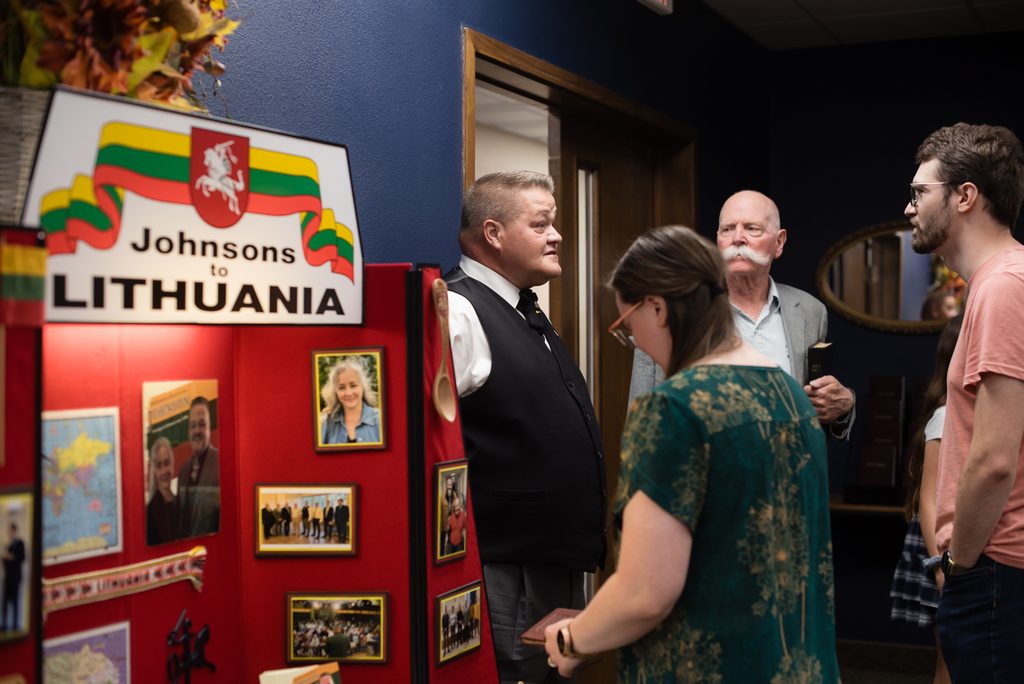
Brian’s journey to Lithuania began in an unexpected way. During a conversation with fellow Bible college students, he jokingly spun a globe to select a country for a missions assignment. His finger landed on Lithuania.
At first, it was simply an amusing coincidence. But that small moment prompted him to begin researching the country. In 1993, Lithuania had recently declared independence from the Soviet Union, and information was not readily available online as it is today.
Brian contacted the Lithuanian embassy and began receiving materials about the country’s history, geography, culture, and people. The more he learned, the more interested he became. That interest gradually developed into a deep burden to visit Lithuania and eventually serve there.
By age 22, Brian had made his first trip to the country. At 24, he moved there as a missionary.
His experience offers a practical lesson for churches, Christian schools, and individuals who want to cultivate a greater heart for missions: Learn about the people you want to reach.
Studying a country’s culture, language, religious background, and spiritual needs can transform an unfamiliar place into a community of real people with real needs. As we learn about them and pray for them, God can use that knowledge to deepen our compassion and concern.
Missions awareness does not have to begin with a plane ticket. It can begin with a book, a missionary’s prayer letter, or a commitment to pray regularly for a particular nation.
Ministry Begins with Relationships
When Brian arrived in Lithuania, he quickly discovered that effective ministry required more than enthusiasm. The country’s history under Soviet rule had influenced how people viewed outsiders. Trust was often difficult to establish and casual conversations with strangers did not necessarily lead to meaningful connections.
Rather than assuming he understood the people, Brian intentionally sought to learn from them. He wanted to understand Lithuanian culture and traditions through local believers instead of relying solely on American perspectives.
He also discovered that shared activities could open doors to friendship. Fishing, ice fishing and mushroom hunting provided opportunities to spend time with people, develop trust and build genuine relationships.
These friendships became important pathways for ministry.
Brian also learned that many Lithuanians identified with Catholic traditions but did not regularly attend church. Others held atheistic or pagan beliefs. Reaching people required patience, sensitivity and a willingness to explain biblical truth carefully.
Instead of immediately emphasizing differences, Brian often began with common ground, discussing God and Jesus Christ before addressing areas of disagreement.
His approach illustrates an essential principle of cross-cultural ministry: People are more likely to listen when they know you genuinely care about them. Faithful evangelism requires both commitment to biblical truth and a sincere love for the people we seek to reach.
Investing in the Next Generation
Brian’s ministry extends beyond evangelism and church planting. He has spent decades helping train Lithuanian believers through a Bible Institute that prepares men for ministry.
Students study biblical doctrine, practical Christian living and principles of church planting. Brian particularly values teaching the patterns of ministry found in the life of the apostle Paul, helping students understand how churches can be established, strengthened and reproduced.
Today, Lithuanian men are increasingly taking responsibility for teaching and leading this work. For Brian, that is a vital part of the mission.
The goal is not for a missionary to remain indispensable forever. It is to equip local believers to lead their churches, disciple others and reach their own communities.
This reflects the biblical principle Paul gave Timothy in 2 Timothy 2:2: entrust the truth to faithful people who will be able to teach others also. Missions is not merely about establishing a ministry; it is about developing disciples who will continue the work for generations.
What Is God Asking You to Do?
You may never have considered serving in a foreign country. Perhaps you believe your circumstances, health, family responsibilities or lack of experience make missions impossible. Brian’s testimony encourages us to bring those concerns to God rather than allowing them to determine our obedience.
You can begin by praying for a country, learning about its people, communicating with missionaries, supporting gospel work or serving faithfully in your local church. God may use those steps to develop a deeper burden for a particular field.
Not every Christian is called to move overseas, but every Christian can participate in the work of making Christ known among the nations.
The question is not whether we can predict every detail of God’s plan. The question is whether we are willing to trust Him with the next step.
A heart for missions often begins with a surrendered heart. As we learn about the nations, love their people and trust God with our future, He can turn our willingness into meaningful service for His glory.
Want to watch the full interview?
Find Disciples in Dialogue on YouTube, Spotify and Apple Podcasts.
+ Leave a comment
View comments